
Leucophor™Optical Brighteners
Fluorescent Whitening Agents that convert invisible UV radiation into brilliant blue-white light — delivering dazzling whiteness beyond what bleaching alone can achieve.
How it Works
Converting UV into Brilliant White
Optical Brightening Agents (OBAs), also known as Fluorescent Whitening Agents (FWAs), are not traditional colorants. Rather than adding colour, they absorb invisible ultraviolet radiation (300–400 nm) present in daylight and fluorescent lighting, and re-emit it as visible blue light (420–470 nm).
This fluorescent emission more than compensates for the slight yellow tint present in most textile and paper substrates, resulting in a measured whiteness that appears brighter than pure white. The effect is visible to the naked eye as a brilliant, luminous white — or under UV light as a striking blue-violet glow.
The Leucophor™ range from Sardar Chemical covers all major OBA chemical families — stilbenes for cellulosics, benzimidazoles for protein fibres, and bis-benzoxazoles for synthetic fibres — providing solutions for every substrate and application method.
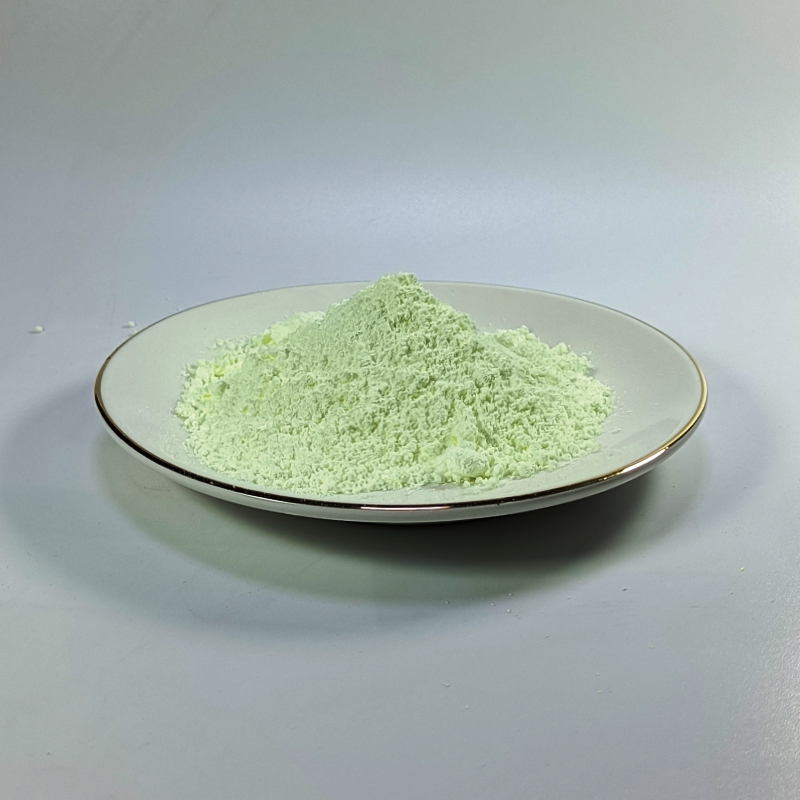
Properties & Performance Data
| Property | Value / Range |
|---|---|
| Chemical Class | Stilbene, Benzimidazole, Bis-benzoxazole, Coumarin |
| Mechanism | Absorbs UV (300–400 nm); emits blue visible (420–470 nm) |
| Net Effect | Masks yellow tint; CIE whiteness index above 100° |
| Substrate Range | Cotton, Polyester, Nylon, Wool, Paper, Detergents |
| Application pH | Neutral to mildly alkaline (pH 7–10); varies by grade |
| Application Temp | 40–60°C (cotton); 120–130°C (polyester HT) |
| Heat Stability | Stable to 200°C+ (grade dependent) |
| Form | Liquid concentrate or powder |
| EU REACH | Compliant |
Industries & Use Cases
Cotton & Cellulosics
Applied in the final rinse or finishing bath to impart brilliant whiteness to bleached cotton, linen and viscose. Compatible with softeners and starches.
Polyester Textiles
High-temperature (HT) OBAs applied at 120–130°C alongside disperse dyes during jet or beam dyeing for brilliant white polyester goods.
Wool & Silk
Benzimidazole-based OBAs from neutral baths for a gentle, natural-looking brightening on delicate protein fibres without yellowing.
Paper & Board
DSB and stilbene OBAs in paper manufacturing for high-brightness writing, printing and packaging paper — dramatically improving CIE whiteness index.
Laundry Detergents
Anionic stilbene OBAs incorporated into detergent formulations to maintain and restore textile whiteness through repeated washing cycles.
Plastics & Coatings
Speciality OBAs for PVC, polypropylene and coating formulations where processing temperatures exceed 200°C.
Leucophor™ OBA Range
| Product | Chemistry | Primary Substrate | Form |
|---|---|---|---|
| Leucophor SA | Stilbene (C.I. Brightener 79) | Cotton, Paper, Detergent | Powder |
| Leucophor BSB 2000 | Stilbene | Cotton, Linen, Detergent | Powder |
| Leucophor BBU | Stilbene (C.I. Brightener 220) | Cotton, Linen, Detergent | Powder |
| Leucophor DMX | Distyryl Biphenyl (C.I. Brightener 71) | Cotton, Viscose, Paper | Powder |
Dosage recommendations, application notes and safety data sheets available on request. Contact us.
Frequently Asked Questions
How do Optical Brightening Agents (OBAs) work?
OBAs absorb invisible ultraviolet radiation (300–400 nm) present in daylight and fluorescent lighting, and re-emit it as visible blue light (420–470 nm). This fluorescent emission compensates for the yellow tint in most textile substrates, producing a whiteness that appears to exceed 100% white. The effect is visible as a brilliant luminous white, or under UV light as a blue-violet glow.
What is the difference between Stilbene, Benzimidazole and Bis-benzoxazole OBAs?
Stilbene-type OBAs (e.g., Leucophor VBL, CBS-X) are water-soluble anionic products for cotton, linen, viscose and detergents. Benzimidazole-based OBAs (e.g., Leucophor NFW) are for protein fibres — wool, silk — applied from neutral baths. Bis-benzoxazole (e.g., Leucophor PES) are heat-stable products for polyester applied at high temperature (120–130°C) alongside disperse dyes.
Are Leucophor™ OBAs suitable for use in laundry detergents?
Yes. The anionic stilbene-type Leucophor products are widely used in laundry detergent formulations. They are compatible with most anionic and non-ionic surfactants, maintain whiteness through repeated washing cycles, and are stable in alkaline detergent matrices.
What application temperature is required for polyester OBAs?
Polyester requires high-temperature (HT) brightening at 120–130°C. Leucophor PES (bis-benzoxazole type) is designed for jet or beam dyeing alongside disperse dyes at these temperatures. For cellulosic fibres, application is at 40–60°C from a water bath.