
Sardol™ / Direcol™Direct Dyes
Substantive anionic dyes for cotton, linen, viscose and leather — applied directly without mordant, with zero restricted aromatic amines.
Compatible Substrates
Substantive Anionic Dyes for Cellulosic Fibres
Direct Dyes are anionic colourants exhibiting high substantivity for cellulosic fibres. They dye cotton, linen, viscose and other cellulosics directly from a neutral or mildly alkaline aqueous bath — no mordant or pre-treatment required. The mechanism relies on van der Waals forces and hydrogen bonding between the planar dye molecule and the cellulose polymer chains.
The Sardol™ / Direcol™ range offers one of the widest colour spectrums available in Pakistan — including an extensive range of browns and blacks that are the core shades required for leather dyeing. All products carry Azo-free certification, making them suitable for tanneries and textile manufacturers with export compliance requirements.
Wash fastness, typically the limitation of direct dyes, is substantially improved by after-treatment with cationic fixing agents — a routine step in professional finishing.
Pro Tip: Improve Wash Fastness
After-treating with a cationic fixing agent improves wash fastness by 1–2 grades — critical for export-quality finished goods.
Fastness Ratings
Sardol™ / Direcol™ — Typical Fastness Grades
With cationic fixing agent after-treatment
Blue Wool scale 1–8
Grades per ISO 105 series. Values are indicative — actual results depend on substrate, shade depth and process parameters.
Technical Properties
Standard Exhaust Dyeing Process
Prepare Stock Solution
Paste the dye with cold water, then dissolve fully in hot water (85–95 °C). A small quantity of soda ash may aid dissolution of stubborn shades.
Set Dyebath
Prepare the dyebath at 40–50 °C at pH 7–9. Add sodium chloride or sulphate (5–30 g/L) to promote exhaustion.
Enter Substrate
Enter pre-scoured, pre-wetted cotton, linen or viscose fabric (or leather) at 40–50 °C with good liquor circulation.
Add Dye Gradually
Add the dissolved dye solution to the running bath over 10–15 minutes. Gradual addition prevents uneven dyeing (unlevel results).
Raise Temperature & Exhaust
Raise temperature at 1–2 °C per minute to 95–100 °C. Maintain at boil for 45–90 minutes. Add more salt in two stages to improve exhaustion.
Cool, Rinse & Fix
Cool to 60 °C, drain, and rinse in warm then cold water. For improved wash fastness, treat with a cationic fixative agent (2–3% owf) at 40–50 °C for 20 minutes.
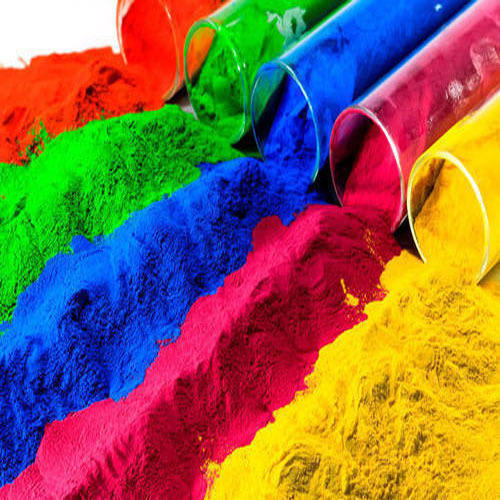
Sardol™ / Direcol™ Colour Range
Full shade cards and technical data sheets available on request. Contact us.
Why Azo-Free Matters for Your Business
Our Direct Dyes are certified free of restricted aromatic amines — the chemical group that has made conventional azo dyes a compliance liability for exporters. Here's what that means for your factory and your customers.
The Chemistry
carcinogenic amines
Safe for humans & export
Azo dyes that release restricted aromatic amines under reductive conditions are banned under EU REACH Annex XVII and equivalent regulations in 30+ countries. Our dye chemistry uses safe chromophore structures — zero restricted amines.
Carcinogenic Amines
Azo dyes containing aromatic amines can cleave to release carcinogenic compounds that penetrate skin and are linked to bladder cancer.
Genotoxic Activity
Several restricted amines exhibit mutagenic and genotoxic activity, damaging DNA in human cells with prolonged skin contact.
30+ Country Ban
Over 30 countries and major trading blocs have banned textiles and leather goods containing restricted azo dyes since the 1990s.
Sardar's Solution
Every dye in our portfolio is rigorously tested — zero restricted aromatic amines. Our customers export to EU, US and Japan with confidence.
Restricted Aromatic Amines (Sample)
Per EU REACH Annex XVII, Appendix 8 — 24 amines restricted in dyes
Export to 30+ Markets with Confidence
Our Azo-Free certification satisfies regulatory requirements across all major export markets
Our 4-Stage Testing Protocol
Every batch of Direct Dyes passes through rigorous quality control before leaving our factory in Gadoon Amazai, Swabi.
Raw Material Screening
All incoming dye intermediates are screened by HPLC before production begins.
In-Process Control
Samples drawn at each reaction stage are tested for amine content.
Finished Goods Testing
Every batch is tested per EN ISO 14362 / EN ISO 17234 protocols before dispatch.
Third-Party Certification
Independent laboratory testing certificates available on request for export shipments.
Frequently Asked Questions
What substrates can Sardol™ / Direcol™ Direct Dyes be used on?
Sardol™ / Direcol™ Direct Dyes are suitable for all cellulosic fibres: cotton, linen, viscose, rayon, jute, and paper. They are also widely used for leather dyeing. They do not require a mordant — the dye applies directly from a neutral bath.
How do Direct Dyes differ from Reactive Dyes?
Direct dyes are held to the fibre by van der Waals forces and hydrogen bonding — a physical attachment, not a covalent bond. This makes application simpler (no alkali required) but wash fastness is typically lower (Grade 2–4) compared to reactive dyes (Grade 4–5). Wash fastness can be significantly improved with cationic fixing agents after dyeing.
Are Sardol™ / Direcol™ Direct Dyes compliant with EU REACH?
Yes. All Sardol™ / Direcol™ dyes are azo-free — they contain no restricted aromatic amines as defined under EU REACH Annex XVII (Appendix 8). This makes them suitable for use in export-oriented tanneries and textile mills supplying to European and UK markets.
What salt is used with Direct Dyes?
Sodium chloride (common salt) or sodium sulphate is added to the dyebath at 5–30 g/L as an exhaustion promoter. The salt reduces the solubility of the dye in water, driving it onto the fibre. Salt is added in stages during the dyeing process.